 Yogurt Atelier
Choosing a Starter
Store-bought yogurt or a freeze-dried packet? What to look for, and how to keep the culture you pick going.
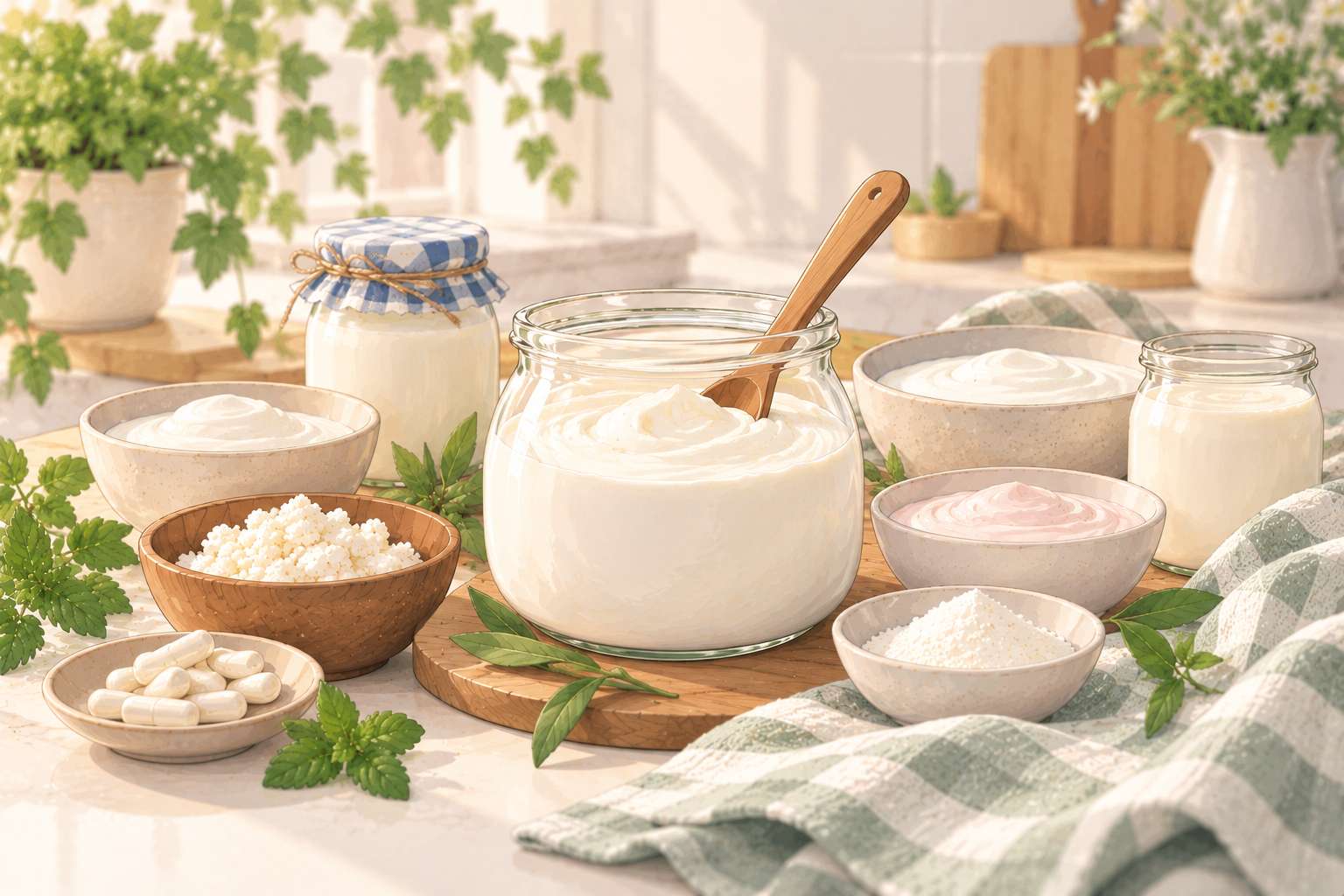
The starter is the small amount of culture that turns milk into yogurt, and it has a large effect on flavor, thickness and how reliably a batch sets. Home cooks usually choose between two options: a spoonful of plain yogurt from a shop or a previous batch, or a commercial starter culture sold as a dried powder. Both work. Neither is universally better. The right choice depends on what you value.
Plain yogurt as a starter
Using a spoonful of plain yogurt is the simplest route. Check the label for plain, unflavored yogurt that lists live or active cultures, since heat-treated products may no longer contain living cultures. Choose a yogurt whose flavor you enjoy, because your batches will tend to resemble it. Remember that shop yogurts are often made with a specific mix of strains and may have ingredients added, so what you get at home may differ slightly from what you bought.
Packet starters
Commercial starter cultures are sold by cheese-making and fermentation suppliers, and by some grocers, as dried powders. They typically specify the strains they contain, and the maker's instructions say how much to use and how to handle the culture. Some are designed to be used again from batch to batch, and others are intended for one use, so read what your product says. Because the manufacturer has tested the culture, results can be more predictable, and you can choose among styles such as milder or thicker.
What to consider
The most useful question is what you want from your yogurt. If you want mildness, look for a starter described as mild. If you want a thick set, choose a culture described as producing a thicker body. If you want to keep a culture going for the long term, check whether the starter is designed for repeated use. A starter that works well for one cook may behave differently in another kitchen, so give it a few batches before judging.
Measuring starter
Using the right amount matters. Extension guidance and the instructions on packet starters give ratios, and the Starter Calculator in this app uses the amount recommended by Washington State University extension for yogurt starter. Adding much more starter than directed tends to make the yogurt taste sharper, rather than making it better, so measure rather than guessing. Follow the temperature and timing from your recipe or starter instructions, since those details depend on the culture and the milk.
Keeping a culture going
When you save a spoonful of your own yogurt to start the next batch, handle it with clean spoons and clean containers, and keep it cold until you use it. A culture can slowly change over repeated use, or become contaminated, which shows as an unpleasant smell, unusual color or mold. If a batch looks or smells wrong, discard it and start again from a fresh starter. Do not taste a questionable batch to decide.
A practical plan
A good first plan is to begin with a plain yogurt you already like, make a few batches, and keep notes on flavor and thickness. If you want more control, try a packet culture and compare the results side by side. Over time you will find the combination that suits your kitchen and your taste.
A starter is a partnership: choose it for the yogurt you want, then learn how it behaves.
Bring your curiosity
into the kitchen.
Explore guided preparation, fermentation tracking and yogurt recipes in Yogurt Atelier for iPhone.
 Coming soon to the App Store.