 Yogurt Atelier
Reading a Yogurt Label
What to look for when you want plain, simple yogurt.

Yogurt is a handy everyday food. It contains protein and calcium, and it works in sweet and savory cooking. This article is general information about reading labels, not personal dietary advice. If you have specific needs or allergies, a qualified professional can guide you. Labeling rules also differ from country to country, so use this as a way of asking better questions of whatever label is in front of you.
Start with the ingredients
Plain yogurt can be as simple as milk and live cultures. Flavored yogurts often add sugar, fruit preparations, flavorings or thickeners. Ingredient lists are usually written in order of weight, so what comes first is present in the largest amount. Comparing two lists side by side tells you more than the front of the pack ever will.
Look at the sugars
Many labels show total sugars and, separately, how much has been added. Milk naturally contains some sugar, lactose, so even plain yogurt shows a figure. A flavored yogurt with a larger number usually has sugar or fruit preparation added. Comparing the same serving sizes is the key, because pots come in different weights.
Compare protein fairly
Nutrition panels show values per serving or per 100 grams. Make sure you compare like with like. Strained yogurts are more concentrated, so they typically show more protein for the same weight. Plant-based yogurts vary: one research review reports roughly 3.8 to 4 percent protein for soy milk and about 0.6 to 2 percent for coconut milk, which is part of why soy and coconut yogurts behave and compare so differently.
Look for live and active cultures
Some labels mention that the yogurt contains live and active cultures. Others have been heat-treated after fermentation, which stops the cultures. In some places, such as the United States, heat-treated yogurt is allowed but should say so on the label. The wording varies by country. Check it if live cultures matter to you, or if you plan to use a shop-bought yogurt as a starter.
A tub that does not mention live cultures will not make a good starter.
Fat levels
Whole, low-fat and non-fat yogurts are all common, and the precise names depend on the country. Fat changes the richness and the number of calories, not the basic nature of the yogurt. Choose what suits your cooking and your taste.
Thickeners and extras
Starch, pectin, gums and milk powder appear on many labels. They are used to thicken or stabilize, and they are not good or bad in themselves. If you want the simplest list, plain yogurt with only milk and cultures is easy to find, and it is easy to make yourself.
Allergens
Milk is an allergen, and plant-based yogurts may contain soy or tree nuts. Allergen statements are usually printed near the ingredients. If you are shopping for someone with an allergy, read them every time, even for a familiar product, because recipes change.
At home
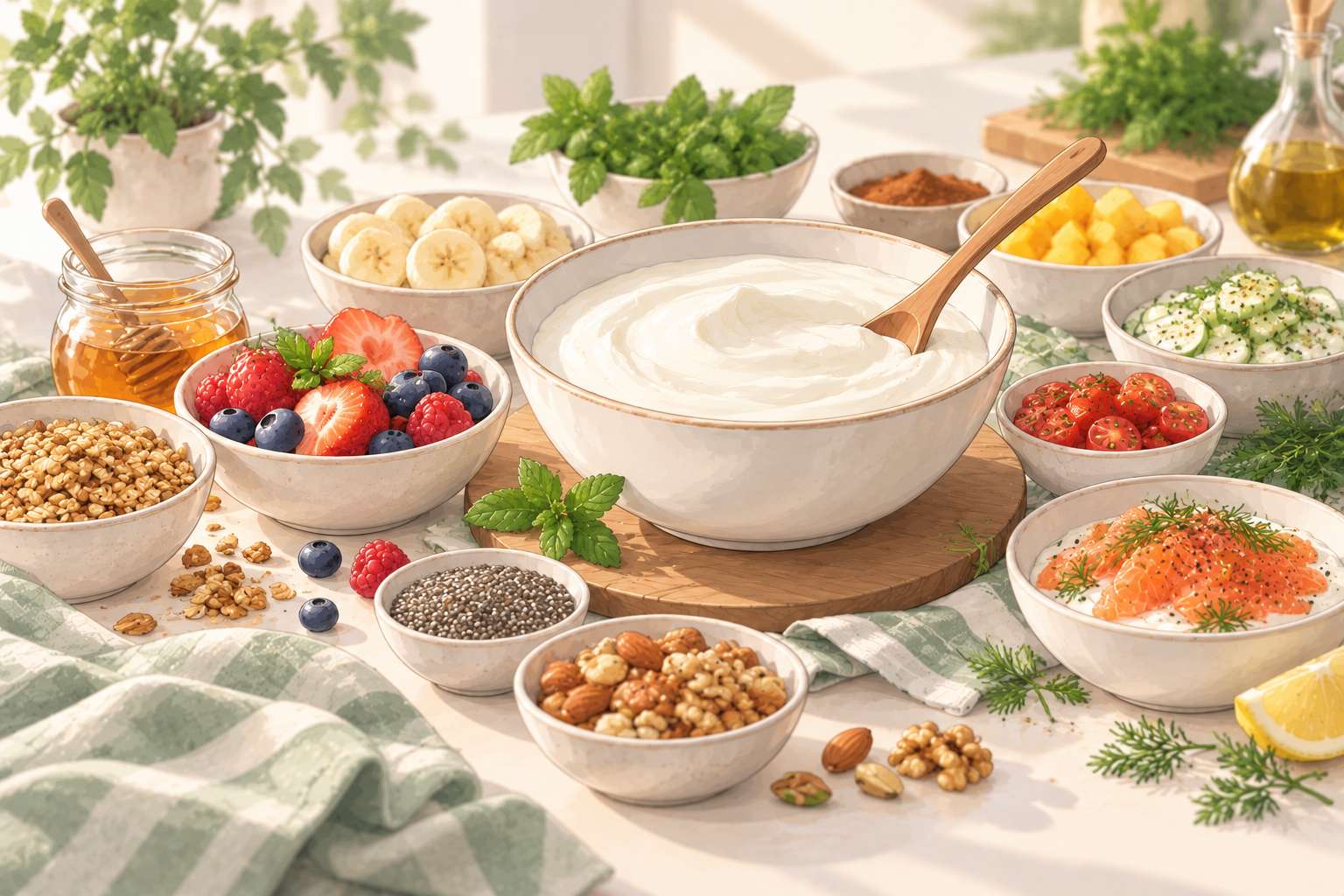
The protein figures shown in Yogurt Atelier recipes are estimates calculated from reference values, not lab measurements, so use them as a guide only. Homemade yogurt lets you decide everything else: a spoon of honey, some fresh fruit, a handful of nuts. You control how sweet it gets.
Plain yogurt is a blank canvas for both breakfast and dinner.
Bring your curiosity
into the kitchen.
Explore guided preparation, fermentation tracking and yogurt recipes in Yogurt Atelier for iPhone.
 Coming soon to the App Store.